Radon Guide Blog
Radon Mitigation System Maintenance: A York, PA Checklist
Your radon system needs almost no upkeep, but a little attention keeps it working. Here is a simple York, PA maintenance checklist for the fan, the gauge, and retesting.
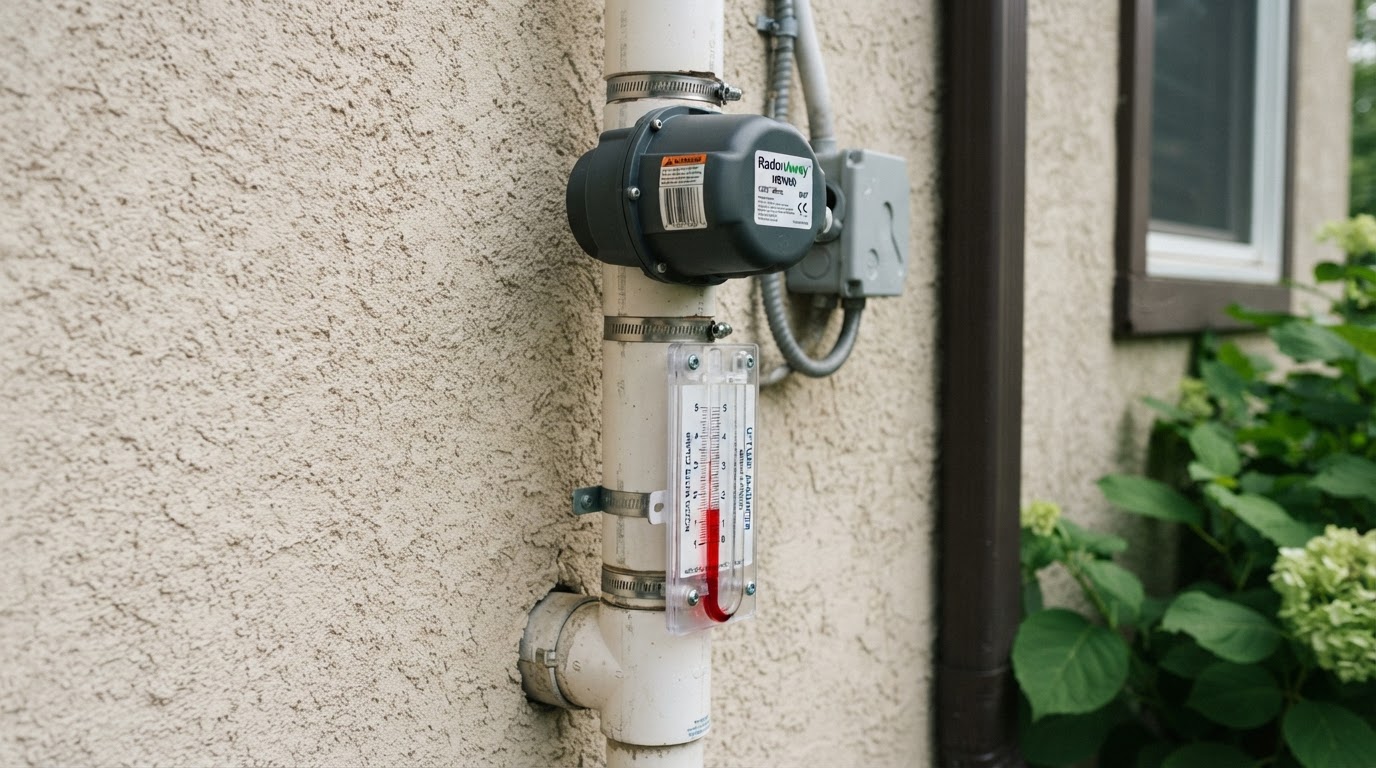
A radon system is designed to run for years
A properly installed radon mitigation system is built to run quietly and continuously for many years with very little upkeep. The inline fan maintains negative pressure under your slab or membrane around the clock, and the piping is durable PVC that does not require regular servicing.
That said, a few simple checks keep the system doing its job and catch problems early, before they quietly let radon creep back into your York, PA home.
Check the manometer gauge
Most systems include a U-tube manometer, a small fluid gauge mounted on the piping that shows the system is pulling vacuum. Checking it takes a few seconds every month or so:
- The two fluid levels should be uneven, which means the fan is creating suction. If they sit level, the fan may have stopped or lost pressure.
- Note the normal reading when the system is working so you can spot a change.
- If the levels go flat, contact your certified mitigator to inspect the fan or piping.
Listen for fan changes
A healthy fan runs with a steady, low hum. A sudden change, louder noise, rattling, or complete silence, can signal a fan nearing the end of its life or a mechanical issue. Inline fans typically last several years, but they do not last forever, and replacing one is a routine job for a certified mitigator.
Fans are usually mounted outside or in an attic, so a change in sound is often the first clue a homeowner notices before any radon level shifts.
Keep the exhaust clear
The system exhausts above the roofline, away from windows and openings. Make sure nothing blocks that exhaust over time:
- Trim back tree branches or vegetation that grow near the pipe outlet.
- Do not stack items against an exterior pipe run.
- Check that snow or debris has not built up around the exhaust in winter.
Retest periodically
Even a working system deserves a periodic check that radon is still low. A good rule of thumb is to retest every two years, or sooner if you make major changes to the home like finishing a basement, adding an addition, or altering HVAC equipment. Any change that affects how air moves through the structure can shift radon levels.
A short-term kit or a continuous monitor is enough for a routine check. If a retest shows the level climbing back up, call your certified mitigator to diagnose whether the system needs an adjustment.
Keep your documentation
Hold on to the original scope of work, the post-installation retest result, and any warranty information for the fan. If you sell the home, this paperwork shows buyers the system was installed and verified by a certified contractor, which can smooth a real estate transaction.
Quick answers
Frequently asked
How long does a radon mitigation fan last?
Inline fans typically last several years of continuous operation. Lifespan varies by model and conditions, so a change in sound or a flat manometer reading is your cue to have a certified mitigator inspect or replace it.
How often should I retest after a system is installed?
Every two years is a reasonable baseline, and sooner after major home changes like finishing a basement or altering HVAC equipment. A short-term kit or continuous monitor is enough for a routine retest.
Our York, PA team put this article together for local homeowners in York and York County. Always verify contractor certification with PA DEP before hiring.
Next steps for York, PA homeowners
- 1
Test if you have not already. A short-term kit or a professional test is the starting point, not a guess based on your neighbor's result.
- 2
Confirm your result. Know your actual number before deciding on next steps.
- 3
If elevated, contact PA DEP-certified mitigators. Use the state directory, not a general contractor search.
- 4
Retest after work is completed. A finished install should come with a follow-up test that confirms the fix actually worked.