The mechanics
How Radon Mitigation Systems Work
Most radon mitigation systems follow one basic principle: intercept the gas below the home and vent it outside before it has a chance to build up indoors. This page explains sub-slab depressurization, crawlspace approaches, sealing, and what a properly installed system in a York, PA home should look like.
The mechanics
How radon mitigation works
Most radon mitigation systems follow the same basic principle: intercept the gas below the home and vent it outside before it has a chance to build up indoors. The exact setup depends on your foundation, but the mechanics are straightforward once you understand the pieces.
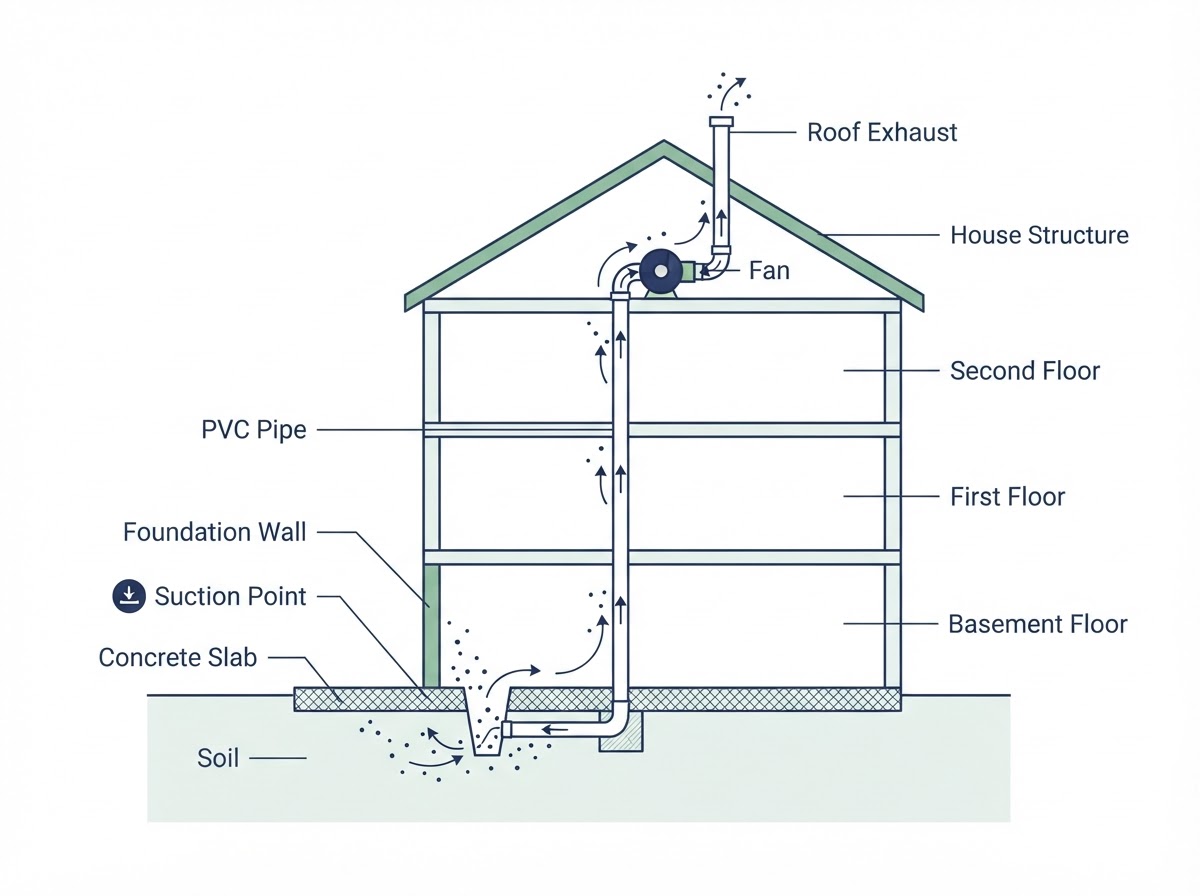
Sub-slab depressurization (most common)
This is the standard approach for homes with a concrete slab or basement floor, and it's what most York County homes end up with.
- A hole is cut into the slab, and a sealed suction point is installed beneath it
- PVC piping runs from that point up through the home, typically routed through a closet, garage, or exterior wall
- An inline fan creates continuous negative pressure, pulling soil gas from under the slab into the pipe
- The pipe exhausts above the roofline, away from windows and other openings, so the vented gas disperses safely outdoors
Homes with more than one foundation section, or a larger footprint, sometimes need more than one suction point to pull air evenly from under the entire slab.
Crawlspace approaches
If part or all of the home sits over a crawlspace instead of a slab, the system usually pairs a heavy-duty vapor membrane laid across the crawlspace floor with a suction point that draws air from beneath that membrane. The same fan-and-exhaust logic applies, it's just adapted to a dirt or gravel floor instead of concrete.
Sealing openings
Sealing visible cracks, gaps around pipes, and sump pit covers is a reasonable support step, and a good contractor will usually do some of it as part of the job. On its own, though, sealing is not a mitigation system. It does not create the negative pressure needed to actually pull radon out from under the home, so it should never be sold to you as a standalone fix.
What success looks like
A properly installed system has a few clear signs: the fan runs continuously and quietly, the system is labeled so anyone in the home knows what it is, and a post-installation retest shows a meaningfully lower number than what you started with. If any of those three things are missing, the job isn't finished.
Next steps for York, PA homeowners
- 1
Test if you have not already. A short-term kit or a professional test is the starting point, not a guess based on your neighbor's result.
- 2
Confirm your result. Know your actual number before deciding on next steps.
- 3
If elevated, contact PA DEP-certified mitigators. Use the state directory, not a general contractor search.
- 4
Retest after work is completed. A finished install should come with a follow-up test that confirms the fix actually worked.