Radon Guide Blog
Radon Testing vs. Radon Mitigation in York, PA: What's the Difference?
Testing measures radon, mitigation lowers it. York, PA homeowners often confuse the two. Here is the difference, why order matters, and what each step actually costs.
Testing and mitigation are two different jobs
Radon testing and radon mitigation are related, but they are not the same thing, and mixing them up wastes money. Testing measures how much radon gas is currently in your York, PA home. Mitigation is the physical system that lowers that number once you know it is elevated. You always test first, and mitigation only comes into play if the result calls for it.
A common mistake in York County is paying for a mitigation system before anyone has measured the actual level. Radon varies house to house, even on the same street, so a neighbor's reading tells you nothing about your home. The only way to know your number is to test your own house.
What radon testing actually involves
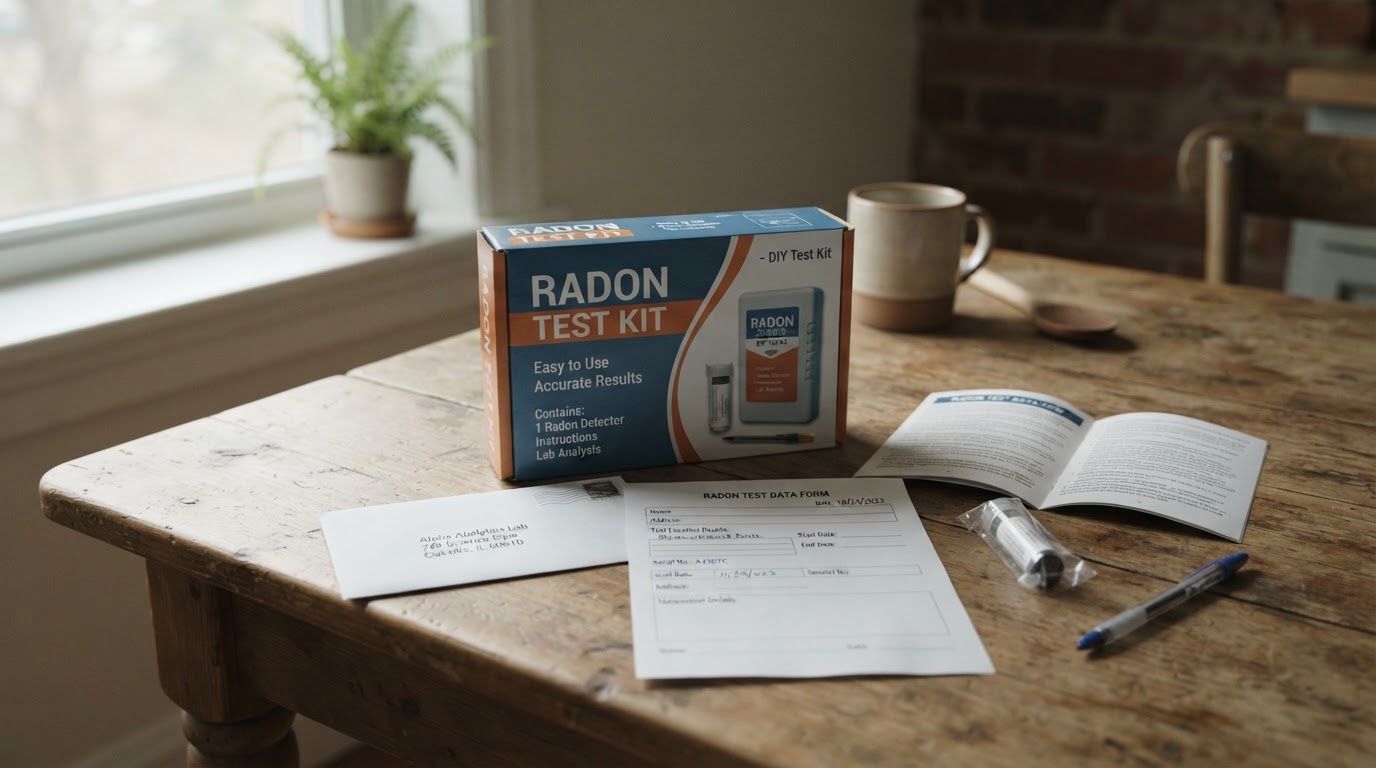
Testing is passive and inexpensive. There are three practical options for York County homeowners:
- DIY short-term test kits sit in your home for a few days and mail to a lab, typically $15 to $30.
- Digital continuous monitors give ongoing readings and let you watch how levels shift with seasons or HVAC use.
- Professional testing, where a PA DEP-certified tester places and retrieves the equipment, is what most real estate transactions require.
Short-term DIY kits are a reasonable first step if you have never tested. If you are buying or selling a home in York, PA, lenders and buyers usually expect a professional result handled by a disinterested, certified party.
What radon mitigation actually involves
Mitigation is the fix. The most common approach for homes with a concrete slab or basement floor is sub-slab depressurization: a sealed suction point is installed beneath the slab, PVC piping routes up through the home, and an inline fan pulls soil gas out and exhausts it above the roofline before it ever reaches the air you breathe.
This is a real construction job, not a gadget or a filter. It requires someone trained in how radon moves through a structure, and in Pennsylvania that person must hold active PA DEP certification.
Why the order matters
Radon decisions follow a logical sequence. Skip a step and you either spend money you did not need to spend, or you guess about a serious health question.
- Test your home to get your actual number.
- Compare it to the EPA action level of 4.0 pCi/L.
- If elevated, hire a PA DEP-certified mitigator to design and install a system.
- Retest after installation to confirm the system worked.
Many York County homeowners also choose to act in the 2 to 4 pCi/L range, since lower is generally better and the cost of mitigation is often modest relative to long-term exposure. That is a personal decision, but it is still a decision you make after testing, not before.
Cost: testing is cheap, mitigation is an investment
Testing is a small, one-time expense. A short-term kit costs about the same as a couple of cups of coffee. Professional testing for a real estate transaction runs higher because of the labor and documentation involved, often in the $100 to $200 range.
Mitigation is a larger investment. Typical residential mitigation in the Pennsylvania market is often discussed in the range of roughly $800 to $2,200, depending on foundation type, radon level, and how complex the install is. Use the cost calculator on this site for a rough estimate, then get a written scope from a certified contractor.
Quick answers
Frequently asked
Can I just install a mitigation system without testing?
No. Mitigation is designed based on your actual radon level and foundation, so testing first is the only way to know whether you need it and how aggressive the system should be. Installing a system blind wastes money and may not address your home's real conditions.
Does an air purifier count as mitigation?
No. Air purifiers, including HEPA filters, do not address radon gas, which enters from the soil beneath your home. Only a mitigation system that vents the gas before it enters living space lowers your level.
Our York, PA team put this article together for local homeowners in York and York County. Always verify contractor certification with PA DEP before hiring.
Next steps for York, PA homeowners
- 1
Test if you have not already. A short-term kit or a professional test is the starting point, not a guess based on your neighbor's result.
- 2
Confirm your result. Know your actual number before deciding on next steps.
- 3
If elevated, contact PA DEP-certified mitigators. Use the state directory, not a general contractor search.
- 4
Retest after work is completed. A finished install should come with a follow-up test that confirms the fix actually worked.