Radon Guide Blog
Sub-Slab Depressurization Explained for York County Homes
Sub-slab depressurization is the most common radon mitigation method in York County. Here is how it works, what the parts do, and why a single suction point is not always enough.
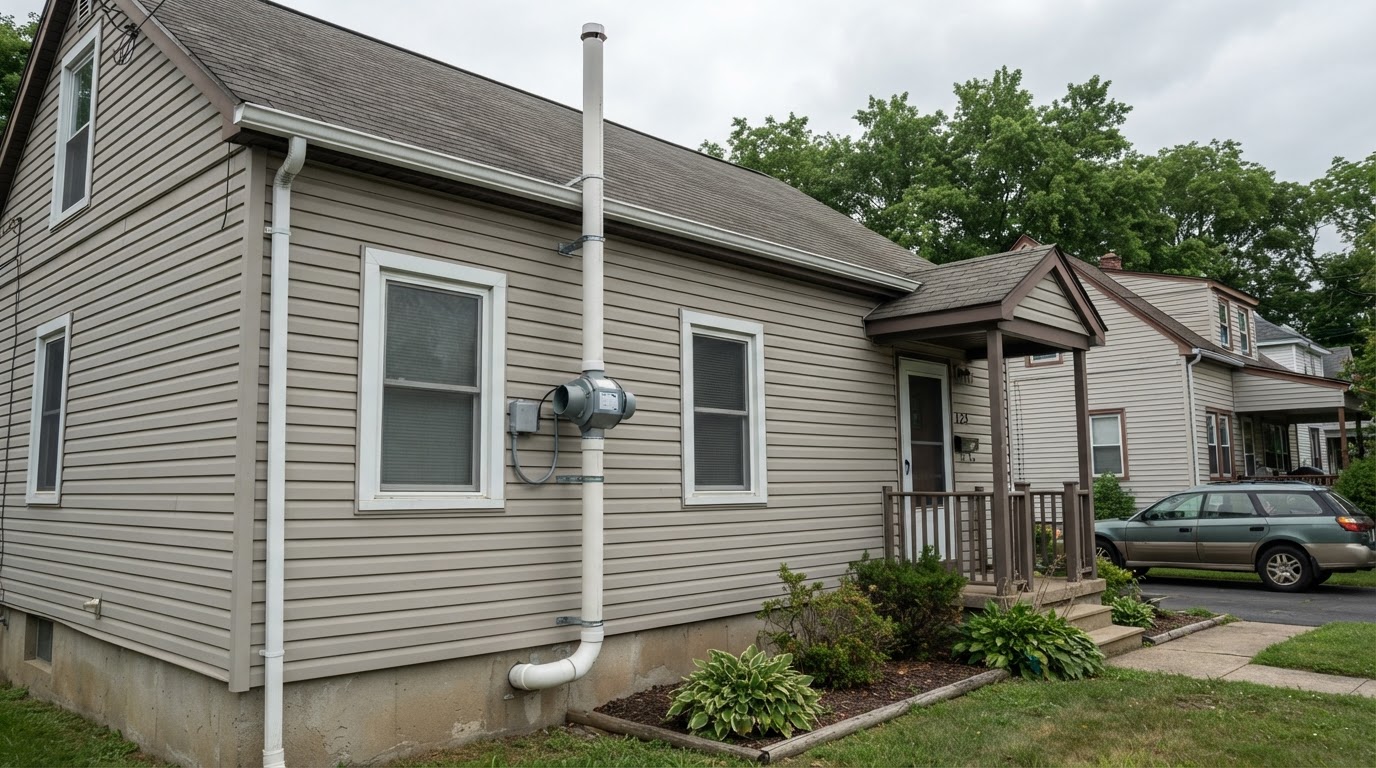
The principle: intercept the gas below the home
Most radon mitigation systems follow the same basic principle: intercept the gas below the home and vent it outside before it has a chance to build up indoors. Sub-slab depressurization is the standard approach for homes with a concrete slab or basement floor, and it is what most York County homes end up with.
Radon in York County homes typically enters through the foundation, cracks in the slab, sump pits, or crawlspaces. Rather than trying to seal every possible entry point, a sub-slab system creates a continuous low-pressure zone beneath the floor that draws soil gas into a pipe instead of letting it seep upward.
The parts of the system
A sub-slab depressurization system has a few simple, durable parts that work together:
- A suction point, created by coring a hole through the slab and sealing a PVC pipe into it.
- PVC piping that runs from the suction point up through the home, usually routed through a closet, garage, or along an exterior wall.
- An inline fan that creates continuous negative pressure, pulling soil gas from under the slab into the pipe.
- An exhaust above the roofline, positioned away from windows and openings so the vented gas disperses safely outdoors.
- A system label and a manometer gauge so anyone in the home can see the system is running and know what it is.
Why one suction point is not always enough
Homes with more than one foundation section, or a larger footprint, sometimes need more than one suction point to pull air evenly from under the entire slab. A single point can leave dead zones where radon still collects, which is one reason a low bid sometimes means a single suction point where your home actually needs two.
This is exactly why a certified mitigator evaluates your foundation first. A proper design matches the suction layout to how air actually moves beneath your specific home, not a one-size-fits-all package.
How crawlspace sections change the design
If part or all of your York County home sits over a crawlspace instead of a slab, the system usually pairs a heavy-duty vapor membrane laid across the crawlspace floor with a suction point that draws air from beneath that membrane. The same fan-and-exhaust logic applies, it is just adapted to a dirt or gravel floor instead of concrete.
Homes with mixed foundations, a basement plus a crawlspace, may need a combined approach with both a sub-slab point and a membrane suction point tied into the same fan.
Sealing is support, not the solution
Sealing visible cracks, gaps around pipes, and sump pit covers is a reasonable support step, and a good contractor will usually do some of it as part of the job. On its own, though, sealing is not a mitigation system. It does not create the negative pressure needed to actually pull radon out from under the home, so it should never be sold to you as a standalone fix.
What success looks like
A properly installed system has a few clear signs: the fan runs continuously and quietly, the system is labeled so anyone in the home knows what it is, and a post-installation retest shows a meaningfully lower number than what you started with. If any of those three things are missing, the job is not finished.
Quick answers
Frequently asked
How loud is a sub-slab depressurization fan?
A properly installed inline fan runs quietly and continuously, usually mounted outside or in an attic where any hum is minimal indoors. If a fan is loud enough to notice inside, it is worth having a certified mitigator check the installation.
Does the system run all the time?
Yes. The fan runs continuously to maintain negative pressure under the slab. It uses a small amount of electricity, comparable to a low-wattage appliance, and is designed for constant operation.
Our York, PA team put this article together for local homeowners in York and York County. Always verify contractor certification with PA DEP before hiring.
Next steps for York, PA homeowners
- 1
Test if you have not already. A short-term kit or a professional test is the starting point, not a guess based on your neighbor's result.
- 2
Confirm your result. Know your actual number before deciding on next steps.
- 3
If elevated, contact PA DEP-certified mitigators. Use the state directory, not a general contractor search.
- 4
Retest after work is completed. A finished install should come with a follow-up test that confirms the fix actually worked.