Radon Guide Blog
Activating a Passive Radon System in a York, PA Home
Newer York, PA homes often have a passive radon pipe roughed in. Here is what activation means, why it costs far less than a full system, and when it is worth doing.
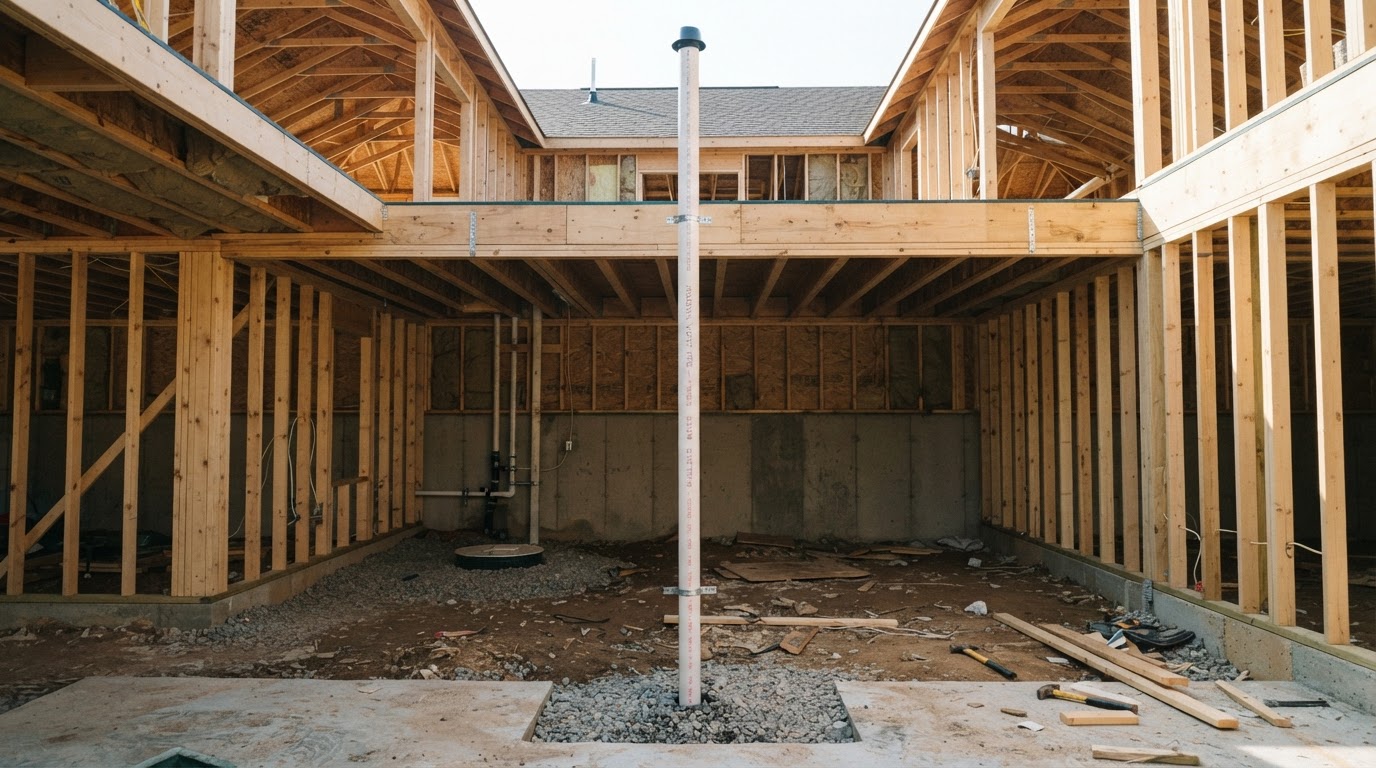
What a passive system is
Many newer homes in York, PA were built with a passive radon pipe, a PVC stack roughed in through the basement floor and up through the roof during construction. The pipe relies on natural stack effect to vent soil gas, with no fan. It is a good head start, but it is not a full mitigation system.
Activation is one of the system types tracked in our radon mitigation York PA pillar guide, and it is often the least expensive path to a working system.
What activation adds
Activating a passive system turns it into an active one by adding the missing pieces:
- An inline fan is installed in the pipe run, usually in the attic or on the exterior.
- A dedicated electrical switch or outlet is added for the fan if one is not present.
- A manometer gauge is mounted on the basement pipe so you can confirm the fan is pulling vacuum.
- The system is labeled so anyone in the home knows what it is.
Because the slab does not need to be cored and the pipe is already in place, activation skips the most labor-intensive part of a full install.
What it costs in York County
Activating an existing passive system cost a median of $775 in York County, across 130 systems reported to the Pennsylvania DEP from 2024 to 2026. That is well under the $1,150 median for a full new system.
Source: Pennsylvania DEP, Radon Mitigation System records (data.pa.gov), York County systems reported 2024–2026. Retrieved September 30, 2026.
If your home already has the pipe, ask about activation before agreeing to a full new system. A certified mitigator can confirm whether the existing pipe is suitable for a fan.
Test first, even with a passive pipe
A passive pipe does not guarantee low radon. Test your home to get your actual number before deciding whether activation is needed. If your result is at or above 4.0 pCi/L, activation is usually the most cost-effective fix, since the pipe is already there.
Quick answers
Frequently asked
Does a passive radon pipe mean my home is safe?
Not necessarily. A passive pipe vents some soil gas through natural stack effect, but it has no fan and does not create strong negative pressure. Test your home to get your actual number before assuming the passive pipe is enough.
Can any passive pipe be activated?
Usually, if it was installed correctly and runs from under the slab to above the roofline. A certified mitigator inspects the pipe to confirm it is suitable for a fan before activating it. In rare cases the pipe route needs modification.
Our York, PA team put this article together for local homeowners in York and York County. Always verify contractor certification with PA DEP before hiring.
Next steps for York, PA homeowners
- 1
Test if you have not already. A short-term kit or a professional test is the starting point, not a guess based on your neighbor's result.
- 2
Confirm your result. Know your actual number before deciding on next steps.
- 3
If elevated, contact PA DEP-certified mitigators. Use the state directory, not a general contractor search.
- 4
Retest after work is completed. A finished install should come with a follow-up test that confirms the fix actually worked.