Radon Guide Blog
Radon Sealing vs. Mitigation in York, PA: What Actually Works
Sealing cracks is a support step, not a radon fix. Here is why sealing alone does not lower radon in York, PA homes and what a real mitigation system does differently.
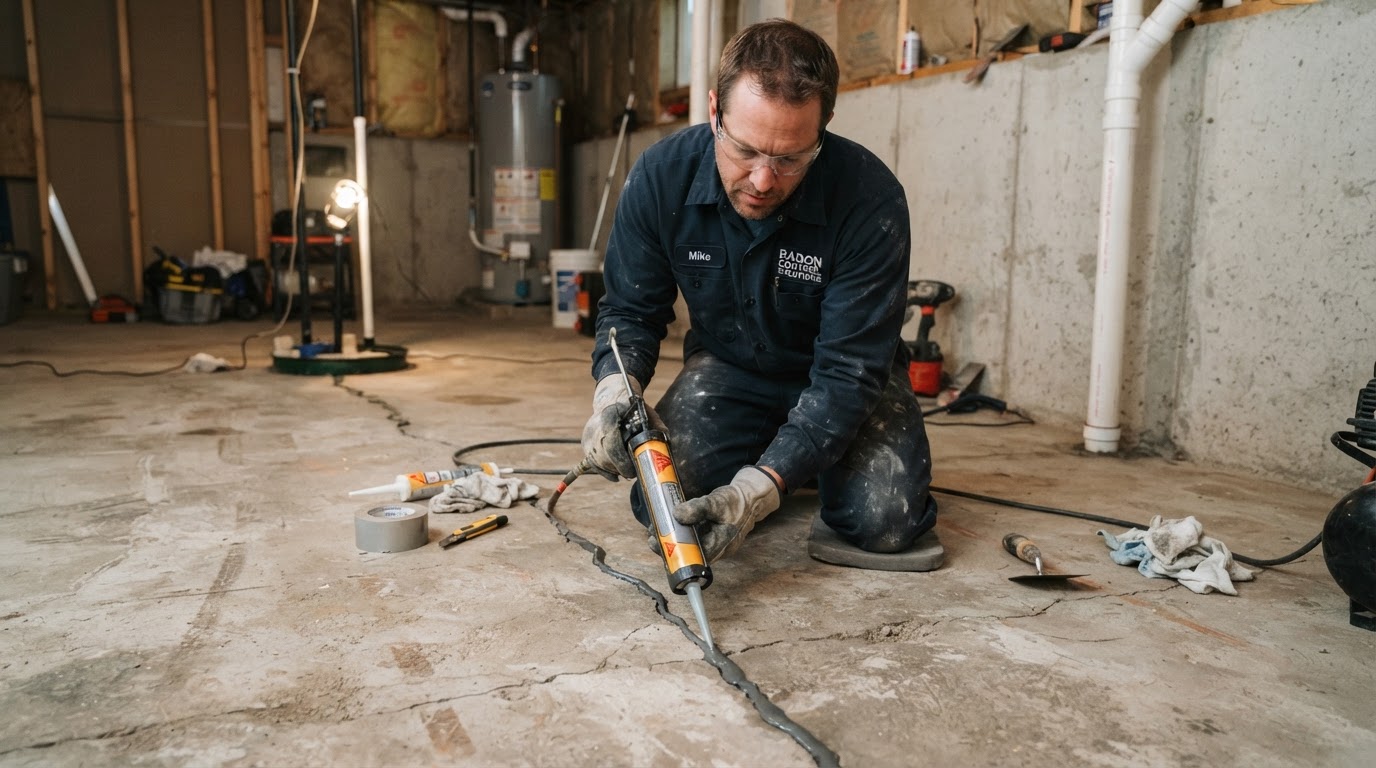
The difference matters for your wallet
Some York, PA homeowners are offered crack sealing as a radon fix, often at a lower price than a full system. Understanding why sealing alone does not work can save you from paying for something that does not actually lower your radon level.
Sealing is one part of the process explained in our radon mitigation in York, PA pillar guide, but it is never the whole solution.
Why sealing alone does not lower radon
Radon enters through the foundation, slab cracks, sump pits, crawlspaces, and the pores of the concrete itself. You cannot seal every pathway, because much of the entry happens through the slab as a whole, not just visible cracks. Sealing the cracks you can see reduces a few entry points but does nothing about the rest.
More importantly, sealing does not create negative pressure. A real mitigation system actively pulls soil gas away from beneath the home and vents it outside. Sealing is passive, so gas simply finds another path upward. That is why no certified mitigator sells sealing as a standalone radon fix.
Where sealing does belong
Sealing is a legitimate support step within a full mitigation system. A good contractor seals major cracks, the sump lid, and other openings so the fan pulls air from under the slab rather than drawing conditioned air from the room. Sealing helps the system work efficiently, but the fan is what actually lowers the radon level.
If a contractor offers sealing without a fan and suction point, that is a red flag, not a bargain.
What actually works
In York County, the median radon level fell from 12 pCi/L before mitigation to 1.0 pCi/L after, across systems reported to the Pennsylvania DEP. That drop comes from active sub-slab depressurization with a running fan, not from sealing.
Source: Pennsylvania DEP, Radon Mitigation System records (data.pa.gov), York County systems reported 2024–2026. Retrieved September 30, 2026.
If your test came back elevated, the fix is a certified mitigation system, with sealing as one supporting step within it.
Quick answers
Frequently asked
Can I just seal my basement floor to lower radon?
No. Sealing visible cracks reduces a few entry points but does not create the negative pressure needed to pull radon out from under the home, and radon still enters through the slab as a whole. Only an active mitigation system with a fan meaningfully lowers the level.
Is sealing part of a real mitigation system?
Yes. A good contractor seals major cracks and the sump lid so the fan pulls from under the slab rather than from the room. Sealing helps the system work efficiently, but the fan is what actually lowers radon.
Our York, PA team put this article together for local homeowners in York and York County. Always verify contractor certification with PA DEP before hiring.
Next steps for York, PA homeowners
- 1
Test if you have not already. A short-term kit or a professional test is the starting point, not a guess based on your neighbor's result.
- 2
Confirm your result. Know your actual number before deciding on next steps.
- 3
If elevated, contact PA DEP-certified mitigators. Use the state directory, not a general contractor search.
- 4
Retest after work is completed. A finished install should come with a follow-up test that confirms the fix actually worked.