Radon Guide Blog
Sealing a Sump Pit for Radon Mitigation in York, PA
A sump pit is a common radon entry point in York, PA basements. Here is why sealing the lid matters, how it ties into a mitigation system, and why sealing alone is not a fix.
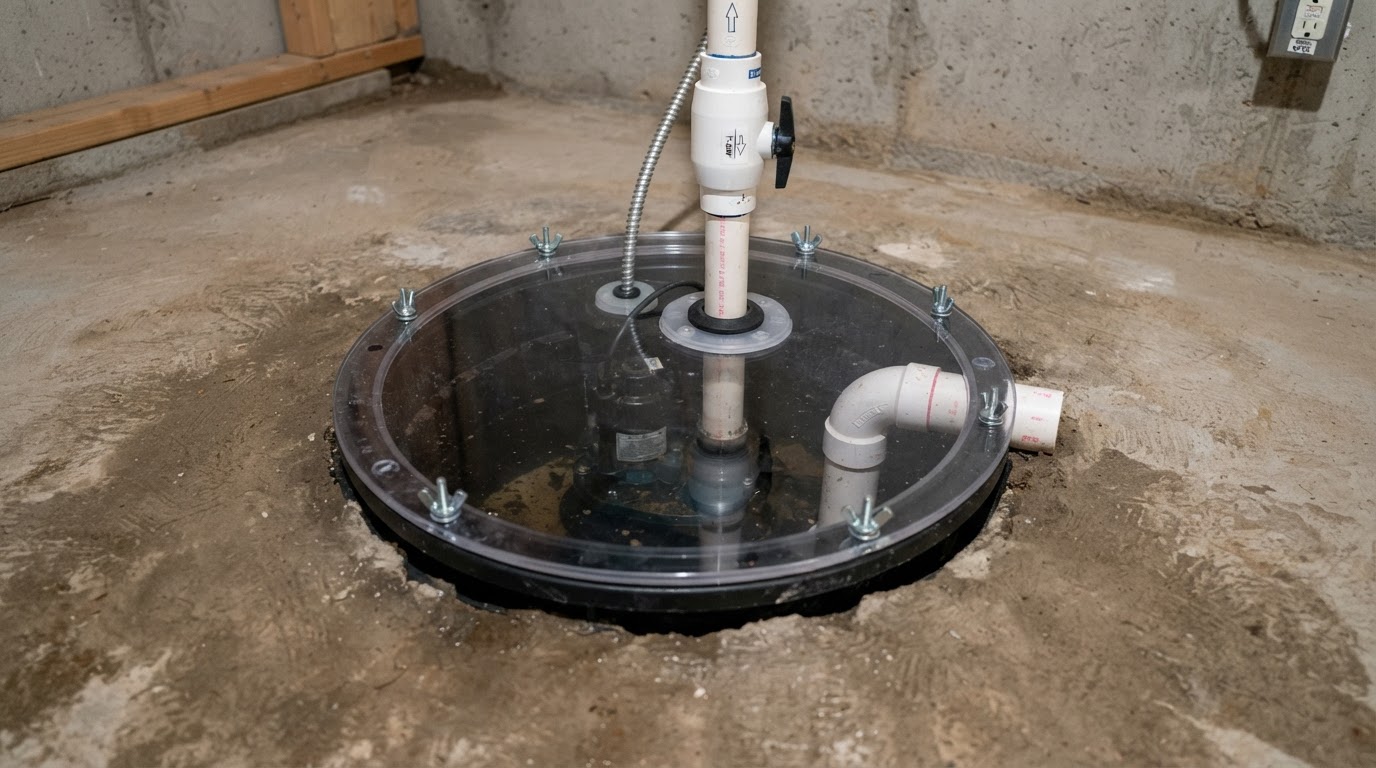
Why the sump pit matters
A sump pit is one of the most common radon entry points in a York, PA basement. The pit connects directly to the soil and drain tile beneath the slab, and an unsealed lid lets soil gas rise straight into the living space. Sealing the lid is a standard part of a proper mitigation system.
Sump sealing is one piece of the broader York County radon mitigation process explained in our pillar guide.
How a sump lid is sealed
A proper sump seal is more than a cover. It usually involves:
- A gasket-sealed polycarbonate or rigid lid that clamps over the pit opening.
- A neoprene or silicone gasket around the rim so no air leaks past the edge.
- Sealed penetrations for the discharge pipe and any electrical cords, using rubber grommets or caulk.
- A suction point tied into the sealed pit, so the mitigation fan pulls air from the drain tile loop beneath the slab.
Tying the suction point into a sealed sump basin is often the most efficient design, because the drain tile already connects to a large area under the slab.
Sealing alone is not a mitigation system
Sealing the sump lid is a support step, not a standalone fix. It reduces one entry point, but it does not create the negative pressure needed to pull radon out from under the home. A sealed sump only works as part of an active system with a running fan. If a contractor offers sump sealing as a complete radon fix, that is a reason to ask more questions.
What to check after sealing
After the sump is sealed and tied into the system, the manometer should show suction, and a post-installation retest should confirm your radon level dropped. If the retest still shows elevated radon, the system may need a second suction point or an adjustment to the sump tie-in. A certified mitigator diagnoses and corrects it.
Quick answers
Frequently asked
Can I seal my own sump pit for radon?
You can install a gasket lid yourself as a support step, but it is not a mitigation system on its own. Radon mitigation requires active suction from a certified system. Sealing without a fan does not lower your level meaningfully.
Does sealing the sump stop the pump from working?
No. A proper sealed lid is designed so the sump pump still operates normally. The discharge pipe and electrical penetrations are sealed with grommets or caulk, and the lid is removable for pump maintenance.
Our York, PA team put this article together for local homeowners in York and York County. Always verify contractor certification with PA DEP before hiring.
Next steps for York, PA homeowners
- 1
Test if you have not already. A short-term kit or a professional test is the starting point, not a guess based on your neighbor's result.
- 2
Confirm your result. Know your actual number before deciding on next steps.
- 3
If elevated, contact PA DEP-certified mitigators. Use the state directory, not a general contractor search.
- 4
Retest after work is completed. A finished install should come with a follow-up test that confirms the fix actually worked.